Lift Kit 101: What First-Time Off-Roaders Need to Know
A lift kit is usually the first real off-road modification people make, and it's also one of the most misunderstood. Between leveling kits, body lifts, and full suspension lifts, and the tire-sizing math that goes with each, it's easy to end up either underwhelmed by a kit that doesn't do what you expected, or in over your head with a setup that's more than you actually needed.
The Three Basic Types Of Lift
Leveling kits address the factory rake most trucks have (the front sitting slightly lower than the rear) by raising the front a couple of inches to match the rear. This is the mildest option, typically doesn't affect ride quality much, and is often the starting point for someone wanting a slightly more aggressive stance and room for modestly larger tires without a major suspension overhaul.
Body lifts raise the vehicle's body off the frame using spacers, without changing the suspension geometry. This increases visual height and tire clearance to some degree without the cost of a full suspension lift, but it doesn't add suspension travel or ground clearance at the axles — it's a budget-friendly option for looks and modest tire size increases, not a serious off-road capability upgrade.
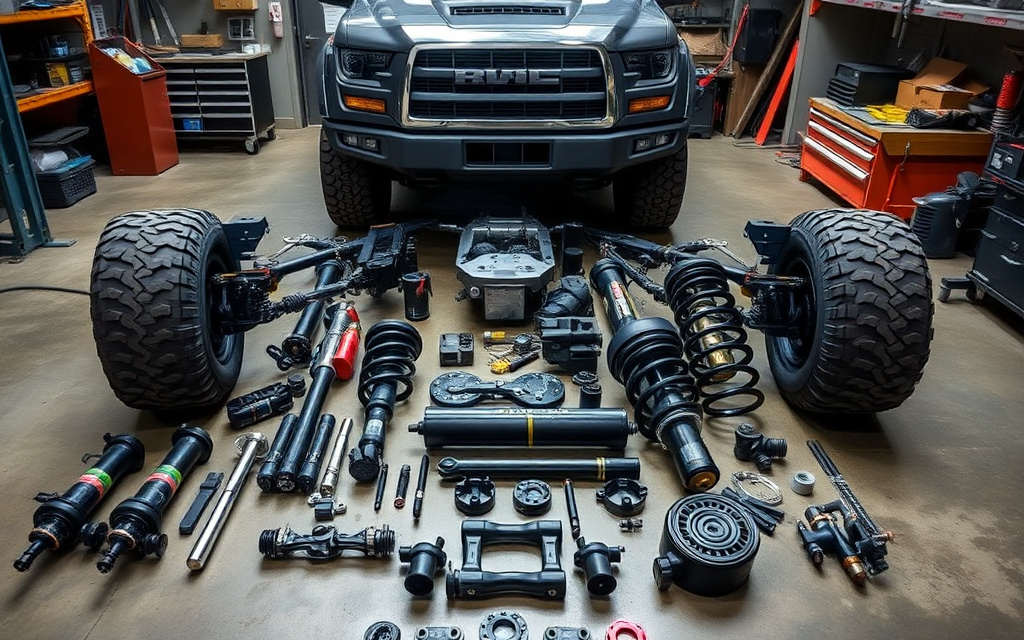
Suspension lifts — from small 2-3 inch kits to full long-arm systems — actually raise the vehicle by modifying or replacing suspension components, increasing ground clearance, suspension travel, and off-road capability along with the visual height increase. This is the category most serious trail builds fall into, and it's also where cost and installation complexity increase the most.
How Much Lift Do You Actually Need?
This is the question that trips up the most first-timers, and the honest answer is: it depends on your goals, not just what looks good. A few general guidelines:
If your main goal is a slightly more aggressive stance and modestly larger tires for a daily-driven truck, a leveling kit or small 2-3 inch lift paired with a moderate tire size increase is often plenty — and keeps ride quality, fuel economy impact, and cost more reasonable.
If you're building toward real trail capability — rock crawling, technical terrain, serious wheeling — a larger suspension lift with increased travel, paired with appropriately aggressive tires, becomes worth the added cost and complexity.
A common mistake is going bigger than necessary because a certain lift height "looks right" without considering that more lift generally means a rougher ride, reduced fuel economy, more stress on other components (CV joints, driveshaft angles), and a higher total cost once you factor in the tires that need to match.
Tire Sizing: The Part People Underestimate
Your lift height and tire size need to work together, and this is where a lot of budgets get blown. As a very general rule of thumb, more lift is required to clear proportionally larger tires without rubbing — but the exact relationship depends heavily on your specific vehicle's wheel wells, fender trim, and whether you're also changing wheel offset.
This is exactly the kind of thing worth confirming with an experienced installer before you order anything — the wrong lift-to-tire combination can mean rubbing at full articulation, or paying for lift height you don't actually need for your tire goals.
Don't Forget The Alignment (And Other Follow-Up Work)
A proper alignment after any suspension lift is essential — skipping it leads to uneven, accelerated tire wear that can undo a lot of the value of your new tires. Depending on the size of your lift, you may also need:
- Extended brake lines to accommodate increased suspension travel without over-stretching factory lines
- Driveshaft or CV angle adjustments on larger lifts, to avoid vibration or premature wear
- Re-gearing (on significant tire size increases) to restore the power and fuel economy lost to larger, heavier tires
A good installer will flag which of these apply to your specific lift height and tire combination — this is part of why professional installation matters so much for lift kits specifically, more so than for many other upgrades.
Recovery Gear: Budget For It From The Start
If your lift kit is part of a build headed toward actual trail use, budgeting for basic recovery gear — a winch, recovery boards, and the right rigging (shackles, straps) — from the beginning is worth it. It's a lot easier to plan for recovery gear as part of your initial financed build than to realize you need it after you're already stuck somewhere remote.
Getting Started
Whether you're going with a mild leveling kit or a full long-arm suspension system, the parts, tires, and recovery gear can all be financed together as one build rather than spread out over a year of piecemeal purchases. Check out our full Off-Road Mods page for more detail, or apply for financing to see what's available for your project.